Why your Duolingo streak isn't getting you speaking (and what actually does)
You can read a menu and you've got a 700-day streak. So why do you still freeze the second someone talks to you?
By The Language Edit Team
You know the feeling. You have put in the days. You can recognize the words on the page. Then a native speaker says one sentence back to you and your brain empties out. Deer in the headlights.
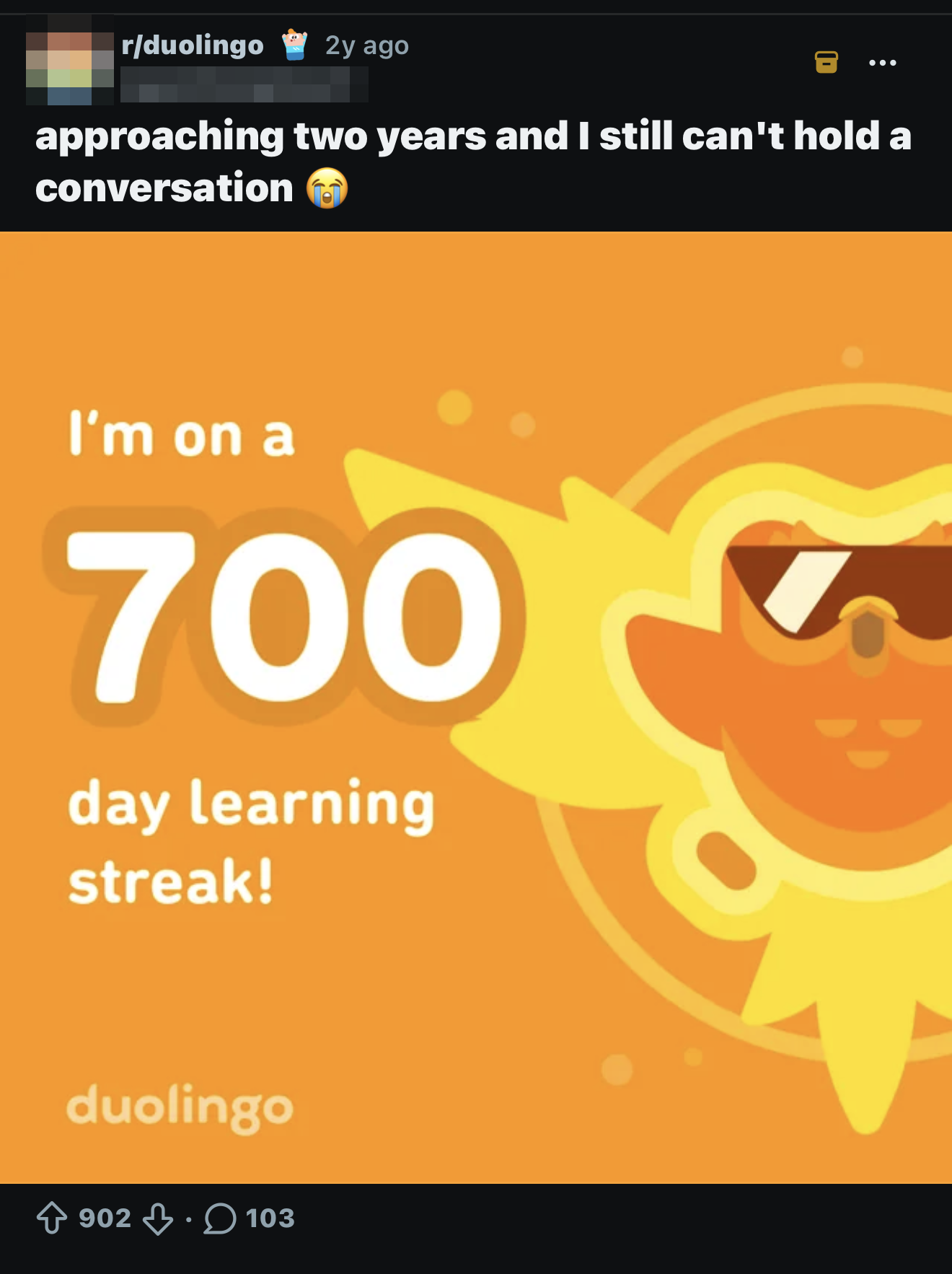
That is not a sign you are bad at languages. It is a sign you have been practicing the wrong skill.
What the popular apps are actually good at
Let's be fair. Apps like Duolingo are genuinely good at some things. They are great for getting started, for building a daily habit, and for growing a base of vocabulary without it feeling like work. If you have a streak going, that is a real achievement and it counts.
But there is a ceiling built into how they work. Most of it is tapping. You pick the right word from a lineup, you match the pairs, you tap the boxes in order. That trains you to recognize a language. It does not train you to produce one, out loud, under the small pressure of a real conversation. It is the difference between understanding French in your head and getting French out of your mouth.
That is the gap almost nobody warns you about. And it is why so many people can "do" an app for a year and still not carry a two-minute conversation.
The one thing that closes the gap
There is no magic here. The thing that gets you speaking is, unsurprisingly, speaking. Specifically:
- Saying full phrases out loud from the very first lesson, not tapping them.
- Hearing yourself back and comparing it to a native speaker, so you can actually fix your pronunciation.
- Being pushed to build your own sentences, not just parrot canned ones.
- Practicing real conversations in private, where it does not matter if you get it wrong.
Do that consistently and something clicks. The words start coming out without you translating them first.
The tool we tested for the speaking gap: Rocket Languages
We have been working through Rocket French, and we have spent time in the Spanish course too. It feels the same in both, which matters here, because the thing being judged is the method, not the language.
It is not a game and it does not pretend to be. Each lesson has you listen to a real conversation between native speakers, break it down, then say it back out loud while it checks your pronunciation. You record yourself, play it against the native audio, and go again until it lands. Grammar is taught for understanding rather than memorizing, and there is culture alongside it, across 14 languages.
The honest report from actually using it:
- It has you speaking from the first lesson. Not tapping. Out loud, on lesson one. That is the entire reason it is on this site.
- The record-yourself-against-a-native feature is the best part of it. It is the thing that closes the gap between what you can recognize and what you can actually produce, and it is the part we would miss if we went back to an app.
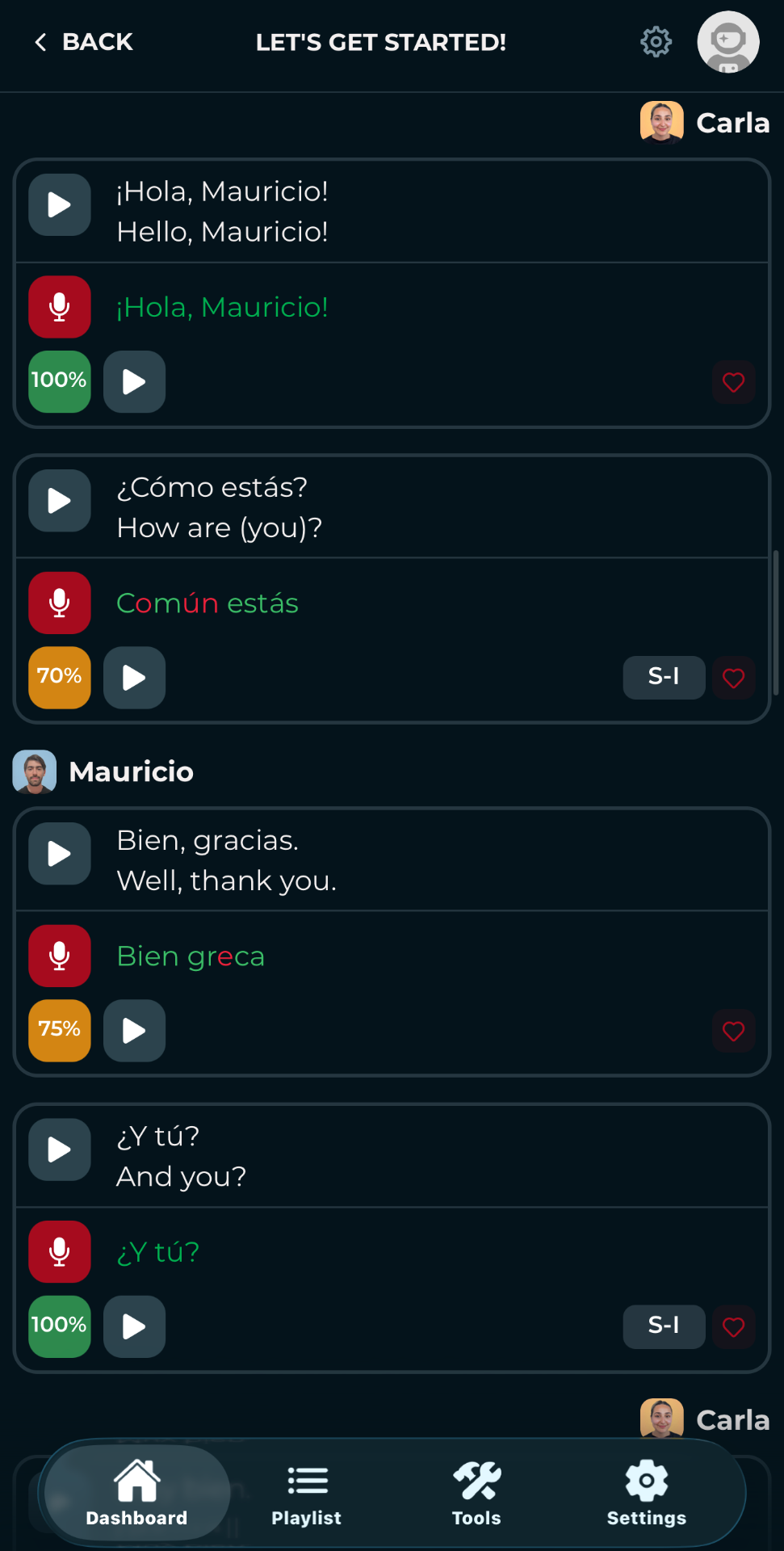
From our own lessons. You hear your voice next to the native speaker's, then close the gap. - In our testing the pronunciation grading heard us fine, including on a phone. That is worth saying, because it is the most common complaint you will find in older reviews of Rocket. It did not reproduce for us. Your microphone and your accent may differ from ours.
- It is more demanding than a tap-the-boxes app. That is the point. You are doing the harder thing that actually works.
- It is lifetime access rather than another monthly subscription. You buy the course and it stays yours.
- Prices move around a lot. Rocket discounts heavily and often, so check the current number on their pricing page rather than trusting any figure you read in an article, including this one.
On the numbers Rocket publishes: 22 years teaching languages, over 2,000,000 members, and an average of 4.7 out of 5 from 5,462 reviews. Be clear about what that last one is. It is Rocket's own on-site rating, not an independent one from somewhere like Trustpilot. Take it as a signal, not a verdict.
Who should skip it: if what you want is a light daily habit and a bit of vocabulary for fun, keep the app. It is good at that, and this will feel like work. Rocket is for the person who is done collecting streaks and wants to actually speak.
You can try the first lesson free, with no credit card, and feel the difference yourself.
Honest expectations
No tool, including this one, makes you fluent in a few weeks. Anyone promising that is selling you something. What a speaking-first approach gives you is different and more useful: you start holding real conversations sooner, and you get the confidence to keep going instead of quitting at the first awkward silence.
Try it the low-risk way
Rocket has a free trial and it does not ask for a credit card, so you can feel the difference for yourself before any money is involved. That is the honest way to find out whether a speaking-first approach actually suits you.